

How Game Engines and UX Design Influence Casual Gaming
 28
28

On today’s platforms, online slot games often sit in the same libraries as puzzle titles, card games and other short-session experiences. That pairing says more about technology and interface design than it does about genre. Casual games now live inside ecosystems shaped by engines, asset pipelines and interface conventions that make fast interactions feel normal. What looks simple on the surface is usually the outcome of decisions about rendering, input handling and feedback timing.
The scale of the market explains why those decisions carry weight. Newzoo’s latest forecasts put global games revenue at around $188.8 billion in 2025, with mobile expected to account for roughly 55 percent of that total. When so much play happens on phones and tablets, engines and interfaces stop being background choices. They become the experience.
From Simple Loops to Engine-Driven Systems
Early casual titles relied on small rule sets and fixed screens. Today, even straightforward experiences are built on engines that manage rendering, input, animation, audio and updates as a single system. That shift did not make games harder to play, but it changed how they are produced and maintained. An engine provides a common layer that can be reused across many projects, which speeds up development and keeps performance predictable across devices with very different capabilities.
A short play loop still matters, but it now runs on top of code that handles memory, frame timing and asset loading in ways players never see. When someone opens a casual title for a few minutes, the engine is already deciding how quickly the first screen appears and how smooth the transitions feel. The same logic applies when a library includes online slot games alongside other casual formats, because the surrounding platform expects consistent behavior across very different game types.
Engines also make change routine. Content can be swapped without touching core logic. Fixes can be deployed without rebuilding the whole project. That stability is one reason casual games can run for years on shifting hardware and operating systems.
How UX Design Shapes Short Play Sessions
Interface design does more than arrange buttons. It sets the rhythm of play. Casual titles are usually opened in short bursts, which means menus, prompts and feedback have to work without explanation. A screen that asks for attention for too long breaks the flow. A confirmation that arrives too late feels like lag, even if the system is technically doing what it should.
Good UX in this space is less about decoration and more about predictability. Icons appear where players expect them. Animations signal state changes without blocking the next action. Text stays readable on small screens. These choices reduce friction in sessions that might last only a few minutes. This emphasis on interface predictability and engagement echoes broader discussions in game design on how play mechanics and feedback loops influence behavior.
The same expectations carry over when players move between formats. A layout that works for a card game should not feel alien when a library also includes online slot games, because the platform trains people to read interfaces in a consistent way. Over time, this creates a shared visual language for casual play.
Randomness, Feedback and System Transparency
Under the hood, engines manage state changes that have to remain coherent even when outcomes are unpredictable. Casual titles often rely on chance, but the system still has to show what happened and why the next screen looks the way it does. That translation from internal state to visible result is where feedback loops earn their keep.
Technically, this is a sequencing problem. Values update. Events trigger. The engine renders a result. If those steps happen in the wrong order, the interface feels inconsistent. If they happen too slowly, it feels unresponsive. Players never see this machinery, but they notice immediately when it goes wrong.
Consistency matters as much as speed. Players do not need to see calculations, but they expect the same actions to produce the same on-screen behavior. That is why many casual titles invest heavily in testing and state management despite their surface simplicity.
Platforms, Performance and Scale
Distribution platforms and device limits shape these choices. A title that runs on a wide range of phones has to assume different screen sizes, different performance ceilings and different network conditions. Engines absorb much of that variation, but design still has to account for it. Interfaces are simplified. Assets are compressed. Transitions are timed to hide loading wherever possible.
With mobile expected to account for around 55 percent of global games revenue in 2025, a large share of casual play happens in environments where attention is short and performance margins are thin. That reality pushes teams toward systems that behave predictably under load and interfaces that communicate quickly.
When players move between genres inside the same storefront, they bring expectations with them. A menu that behaves one way in a puzzle game should not behave unpredictably in online slot games, because the device and the platform frame are both part of the same everyday play space.
What emerges is not a formula, but a pattern. Engines provide structure. UX provides timing. Together, they make casual games feel simple without making their production simple. From the outside, these titles look light. From the inside, they are built with the same systems thinking that drives much larger projects, just applied to shorter sessions and smaller screens.

Kateryna Prykhodko jest kreatywną autorką i niezawodnym współpracownikiem EGamersWorld, znanym z angażujących treści i dbałości o szczegóły. Łączy opowiadanie historii z jasną i przemyślaną komunikacją, odgrywając dużą rolę zarówno w pracy redakcyjnej platformy, jak i zakulisowych interakcjach.

 Regent tworzy listę poziomów: najsilniejsza, średnia i innaSilnik Regent's Star przekształca pojedynczy Genesis w serię Stardust kończącą walkę w Slay the Spire 2 — oto pełna lista poziomów buildów.
 vitaliiD
 Lista poziomów wadliwych kompilacji: najsilniejsza, przeciętna i innaŁańcuch Uproar firmy Defect dominuje we wczesnym dostępie do Slay the Spire 2 dzięki czystej rekurencji ataków — oto pełna lista poziomów kompilacji.
vitaliiD
Lista poziomów wadliwych kompilacji: najsilniejsza, przeciętna i innaŁańcuch Uproar firmy Defect dominuje we wczesnym dostępie do Slay the Spire 2 dzięki czystej rekurencji ataków — oto pełna lista poziomów kompilacji.
vitaliiD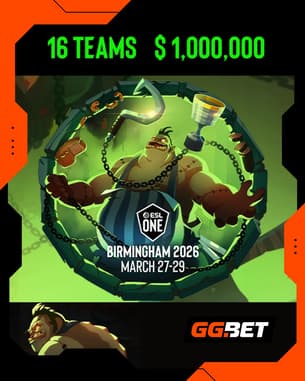 Przegląd fazy grupowej ESL One Birmingham 2026Podsumowanie fazy grupowej ESL One Birmingham 2026: wyniki, najciekawsze mecze i przewidywania dotyczące play-offów.
 Dima Ostapchuk
 Wyniki fazy grupowej ESL One Birmingham 2026 i harmonogram pierwszego dnia fazy play-offPoznaj wyniki 4. dnia fazy grupowej ESL One Birmingham 2026 i 1. dnia fazy play-off.Dima Ostapchuk